

 Vendor:
Cisco 
 Duration:
10 days
 Category:
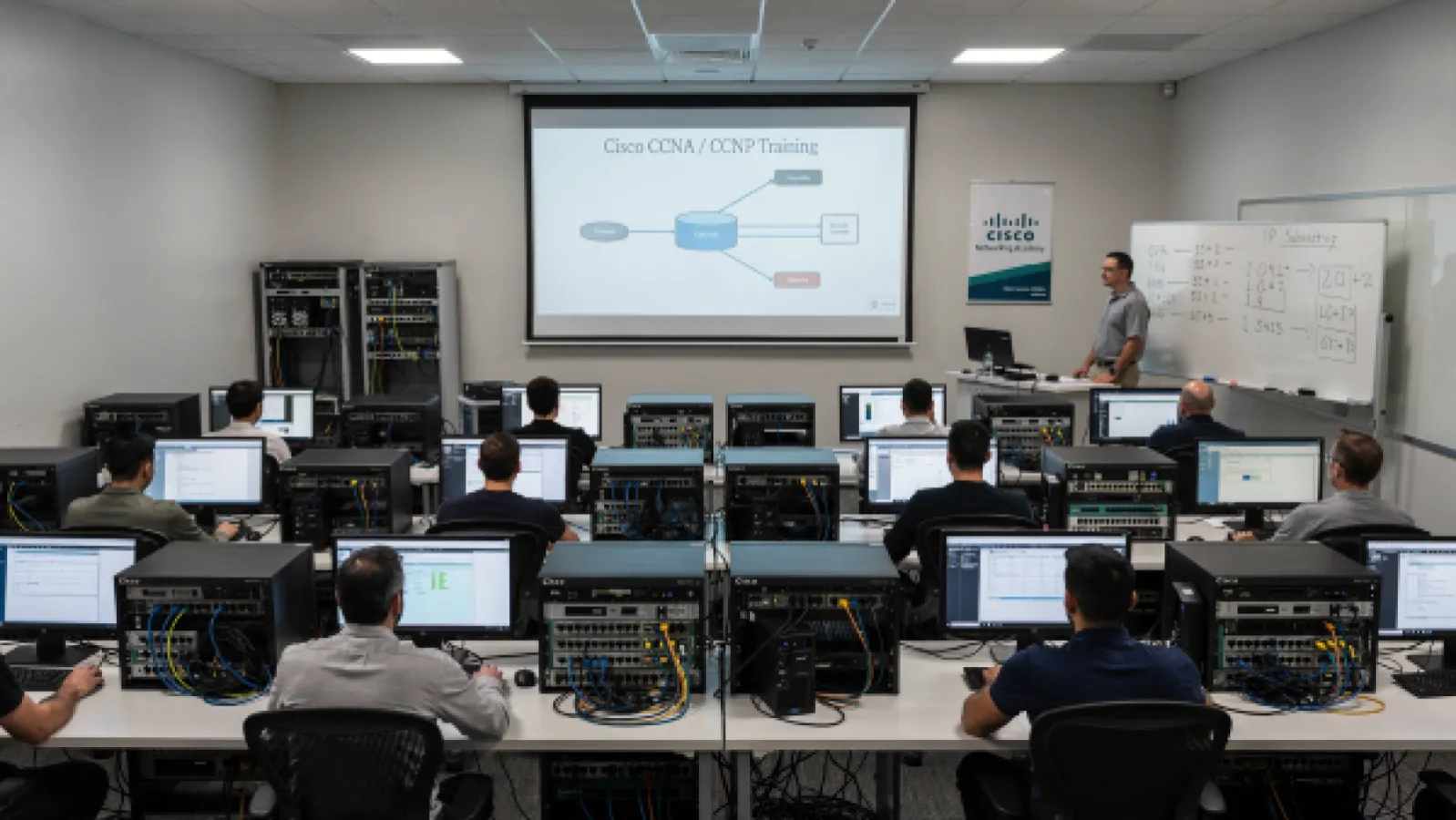
The CCNP Enterprise program consists of two trainings and exams. The first part - Implementing and Operating Cisco Enterprise Network Core Technologies (ENCOR) - provides you with the knowledge and skills needed to configure, troubleshoot, and manage wired and wireless enterprise networks. You will also learn how to implement security principles within an enterprise network and work with network design solutions such as SD-Access and SD-WAN.
The second part - Implementing Cisco Enterprise Advanced Routing and Services (ENARSI) - gives you more advanced knowledge that you need to install, configure, operate, and troubleshoot more complex issues in an enterprise network. This course covers advanced routing and infrastructure techniques and delves deeper into the topics covered in the first ENCOR training.
ENCOR
ENARSI
For the first part of the training (ENCOR), the following prerequisites and skills are desired:
For the second part (ENARSI), the following prerequisites and skills are desired:
10 days (spread over two periods) including one exam per module after the trainings.
This concerns a combination of:
Implementing and Operating Cisco Enterprise Network Core Technologies (ENCOR) v1.0 - 5 days
Implementing Cisco Enterprise Advanced Routing and Services (ENARSI) v1.0 - 5 days
• Examining Cisco Enterprise Network Architecture
• Understanding Cisco Switching Paths
• Implementing Campus LAN Connectivity
• Building Redundant Switched Topology
• Implementing Layer 2 Port Aggregation
• Understanding EIGRP
• Implementing OSPF
• Optimizing OSPF
• Exploring EBGP
• Implementing Network Redundancy
• Implementing NAT
• Introducing Virtualization Protocols and Techniques
• Understanding Virtual Private Networks and Interfaces
• Understanding Wireless Principles
• Examining Wireless Deployment Options
• Understanding Wireless Roaming and Location Services
• Examining Wireless AP Operation
• Understanding Wireless Client Authentication
• Troubleshooting Wireless Client Connectivity
• Introducing Multicast Protocols
• Introducing QoS
• Implementing Network Services
• Using Network Analysis Tools
• Implementing Infrastructure Security
• Implementing Secure Access Control
• Understanding Enterprise Network Security Architecture
• Exploring Automation and Assurance Using Cisco DNA Center
• Examining the Cisco SD-Access Solution
• Understanding the Working Principles of the Cisco SD-WAN Solution
• Understanding the Basics of Python Programming
• Introducing Network Programmability Protocols
• Introducing APIs in Cisco DNA Center and vManage
Lab outline
• Investigate the CAM
• Analyze Cisco Express Forwarding
• Troubleshoot VLAN and Trunk Issues
• Tuning Spanning Tree Protocol (STP) and Configuring Rapid Spanning Tree Protocol (RSTP)
• Configure Multiple Spanning Tree Protocol
• Troubleshoot EtherChannel
• Implement Multi-area OSPF
• Implement OSPF Tuning
• Apply OSPF Optimization
• Implement OSPFv3
• Configure and Verify Single-Homed EBGP
• Implementing Hot Standby Routing Protocol (HSRP)
• Configure Virtual Router Redundancy Protocol (VRRP)
• Implement NAT
• Configure and Verify Virtual Routing and Forwarding (VRF)
• Configure and Verify a Generic Routing Encapsulation (GRE) Tunnel
• Configure Static Virtual Tunnel Interface (VTI) Point-to-Point Tunnels
• Configure Wireless Client Authentication in a Centralized Deployment
• Troubleshoot Wireless Client Connectivity Issues
• Configure Syslog
• Configure and Verify Flexible NetFlow
• Configuring Cisco IOS Embedded Event Manager (EEM)
• Troubleshoot Connectivity and Analyze Traffic with Ping, Traceroute, and Debug
• Configure and Verify Cisco IP SLAs
• Configure Standard and Extended ACLs
• Configure Control Plane Policing
• Implement Local and Server-Based AAA
• Writing and Troubleshooting Python Scripts
• Explore JavaScript Object Notation (JSON) Objects and Scripts in Python
• Use NETCONF Via SSH
• Use RESTCONF with Cisco IOS XE Software
• Implementing EIGRP
• Optimizing EIGRP
• Troubleshooting EIGRP
• Implementing OSPF
• Optimizing OSPF
• Troubleshooting OSPF
• Implementing Internal Border Gateway Protocol (IBGP)
• Optimizing BGP
• Implementing MP-BGP
• Troubleshooting BGP
• Configuring Redistribution
• Troubleshooting Redistribution
• Implementing Path Control
• Exploring MPLS
• Introducing MPLS L3 VPN Architecture
• Introducing MPLS L3 VPN Routing
• Configuring Virtual Routing and Forwarding (VRF)-Lite
• Implementing DMVPN
• Implementing DHCP
• Troubleshooting DHCP
• Introducing IPv6 First Hop Security
• Securing Cisco Routers
• Troubleshooting Infrastructure Security and Services
Lab outline
• Configure EIGRP Using Classic Mode and Named Mode for IPv4 and IPv6
• Verify the EIGRP Topology Table
• Configure EIGRP Stub Routing, Summarization, and Default Routing
• Configure EIGRP Load Balancing and Authentication
• LAB: Troubleshoot EIGRP Issues
• Configure OSPFv3 for IPv4 and IPv6
• Verify the Link-State Database
• Configure OSPF Stub Areas and Summarization
• Configure OSPF Authentication
• Troubleshoot OSPF
• Implement Routing Protocol Redistribution
• Manipulate Redistribution
• Manipulate Redistribution Using Route Maps
• Troubleshoot Redistribution Issues
• Implement PBR
• Configure IBGP and External Border Gateway Protocol (EBGP)
• Implement BGP Path Selection
• Configure BGP Advanced Features
• Configure BGP Route Reflectors
• Configure MP-BGP for IPv4 and IPv6
• Troubleshoot BGP Issues
• Implement PBR
• Configure Routing with VRF-Lite
• Implement Cisco IOS DMVPN
• Obtain IPv6 Addresses Dynamically
• Troubleshoot DHCPv4 and DHCPv6 Issues
• Troubleshoot IPv4 and IPv6 Access Control List (ACL) Issues
• Configure and Verify Control Plane Policing
• Configure and Verify Unicast Reverse Path Forwarding (uRPF)
• Troubleshoot Network Management Protocol Issues: Lab 1
• Troubleshoot Network Management Protocol Issues: Lab 2
The CCNP Enterprise program consists of two trainings and exams. The first part - Implementing and Operating Cisco Enterprise Network Core Technologies (ENCOR) - provides you with the knowledge and skills needed to configure, troubleshoot, and manage wired and wireless enterprise networks. You will also learn how to implement security principles within an enterprise network and work with network design solutions such as SD-Access and SD-WAN.
The second part - Implementing Cisco Enterprise Advanced Routing and Services (ENARSI) - gives you more advanced knowledge that you need to install, configure, operate, and troubleshoot more complex issues in an enterprise network. This course covers advanced routing and infrastructure techniques and delves deeper into the topics covered in the first ENCOR training.
ENCOR
ENARSI
For the first part of the training (ENCOR), the following prerequisites and skills are desired:
For the second part (ENARSI), the following prerequisites and skills are desired:
10 days (spread over two periods) including one exam per module after the trainings.
This concerns a combination of:
Implementing and Operating Cisco Enterprise Network Core Technologies (ENCOR) v1.0 - 5 days
Implementing Cisco Enterprise Advanced Routing and Services (ENARSI) v1.0 - 5 days
• Examining Cisco Enterprise Network Architecture
• Understanding Cisco Switching Paths
• Implementing Campus LAN Connectivity
• Building Redundant Switched Topology
• Implementing Layer 2 Port Aggregation
• Understanding EIGRP
• Implementing OSPF
• Optimizing OSPF
• Exploring EBGP
• Implementing Network Redundancy
• Implementing NAT
• Introducing Virtualization Protocols and Techniques
• Understanding Virtual Private Networks and Interfaces
• Understanding Wireless Principles
• Examining Wireless Deployment Options
• Understanding Wireless Roaming and Location Services
• Examining Wireless AP Operation
• Understanding Wireless Client Authentication
• Troubleshooting Wireless Client Connectivity
• Introducing Multicast Protocols
• Introducing QoS
• Implementing Network Services
• Using Network Analysis Tools
• Implementing Infrastructure Security
• Implementing Secure Access Control
• Understanding Enterprise Network Security Architecture
• Exploring Automation and Assurance Using Cisco DNA Center
• Examining the Cisco SD-Access Solution
• Understanding the Working Principles of the Cisco SD-WAN Solution
• Understanding the Basics of Python Programming
• Introducing Network Programmability Protocols
• Introducing APIs in Cisco DNA Center and vManage
Lab outline
• Investigate the CAM
• Analyze Cisco Express Forwarding
• Troubleshoot VLAN and Trunk Issues
• Tuning Spanning Tree Protocol (STP) and Configuring Rapid Spanning Tree Protocol (RSTP)
• Configure Multiple Spanning Tree Protocol
• Troubleshoot EtherChannel
• Implement Multi-area OSPF
• Implement OSPF Tuning
• Apply OSPF Optimization
• Implement OSPFv3
• Configure and Verify Single-Homed EBGP
• Implementing Hot Standby Routing Protocol (HSRP)
• Configure Virtual Router Redundancy Protocol (VRRP)
• Implement NAT
• Configure and Verify Virtual Routing and Forwarding (VRF)
• Configure and Verify a Generic Routing Encapsulation (GRE) Tunnel
• Configure Static Virtual Tunnel Interface (VTI) Point-to-Point Tunnels
• Configure Wireless Client Authentication in a Centralized Deployment
• Troubleshoot Wireless Client Connectivity Issues
• Configure Syslog
• Configure and Verify Flexible NetFlow
• Configuring Cisco IOS Embedded Event Manager (EEM)
• Troubleshoot Connectivity and Analyze Traffic with Ping, Traceroute, and Debug
• Configure and Verify Cisco IP SLAs
• Configure Standard and Extended ACLs
• Configure Control Plane Policing
• Implement Local and Server-Based AAA
• Writing and Troubleshooting Python Scripts
• Explore JavaScript Object Notation (JSON) Objects and Scripts in Python
• Use NETCONF Via SSH
• Use RESTCONF with Cisco IOS XE Software
• Implementing EIGRP
• Optimizing EIGRP
• Troubleshooting EIGRP
• Implementing OSPF
• Optimizing OSPF
• Troubleshooting OSPF
• Implementing Internal Border Gateway Protocol (IBGP)
• Optimizing BGP
• Implementing MP-BGP
• Troubleshooting BGP
• Configuring Redistribution
• Troubleshooting Redistribution
• Implementing Path Control
• Exploring MPLS
• Introducing MPLS L3 VPN Architecture
• Introducing MPLS L3 VPN Routing
• Configuring Virtual Routing and Forwarding (VRF)-Lite
• Implementing DMVPN
• Implementing DHCP
• Troubleshooting DHCP
• Introducing IPv6 First Hop Security
• Securing Cisco Routers
• Troubleshooting Infrastructure Security and Services
Lab outline
• Configure EIGRP Using Classic Mode and Named Mode for IPv4 and IPv6
• Verify the EIGRP Topology Table
• Configure EIGRP Stub Routing, Summarization, and Default Routing
• Configure EIGRP Load Balancing and Authentication
• LAB: Troubleshoot EIGRP Issues
• Configure OSPFv3 for IPv4 and IPv6
• Verify the Link-State Database
• Configure OSPF Stub Areas and Summarization
• Configure OSPF Authentication
• Troubleshoot OSPF
• Implement Routing Protocol Redistribution
• Manipulate Redistribution
• Manipulate Redistribution Using Route Maps
• Troubleshoot Redistribution Issues
• Implement PBR
• Configure IBGP and External Border Gateway Protocol (EBGP)
• Implement BGP Path Selection
• Configure BGP Advanced Features
• Configure BGP Route Reflectors
• Configure MP-BGP for IPv4 and IPv6
• Troubleshoot BGP Issues
• Implement PBR
• Configure Routing with VRF-Lite
• Implement Cisco IOS DMVPN
• Obtain IPv6 Addresses Dynamically
• Troubleshoot DHCPv4 and DHCPv6 Issues
• Troubleshoot IPv4 and IPv6 Access Control List (ACL) Issues
• Configure and Verify Control Plane Policing
• Configure and Verify Unicast Reverse Path Forwarding (uRPF)
• Troubleshoot Network Management Protocol Issues: Lab 1
• Troubleshoot Network Management Protocol Issues: Lab 2

This training is scheduled as follows in the coming period. Missing a date? Feel free to contact us.
Location: —
Location: —
Location: —
Location: —
Train smarter, not harder. TSTC's unique approach guarantees the effective acquisition of skills and the greatest chance of success.
Learn more about TSTC