
logo-img
Cybersecurity Audit training

Cybersecurity Audit training

3 days Classroom Engels

Sharpest price in just 2 steps

Requesting more information and/or the current price of this training is easy. We take into account any ongoing promotions, subsidies, or relationship discounts.

Description

IT auditors are increasingly being asked to make statements about (cyber)security controls that an organization has implemented to a greater or lesser extent. Since cybersecurity is only covered to a limited extent in regular IT audit training, there is often insufficient knowledge to make well-founded statements about it and to incorporate this field into an audit.

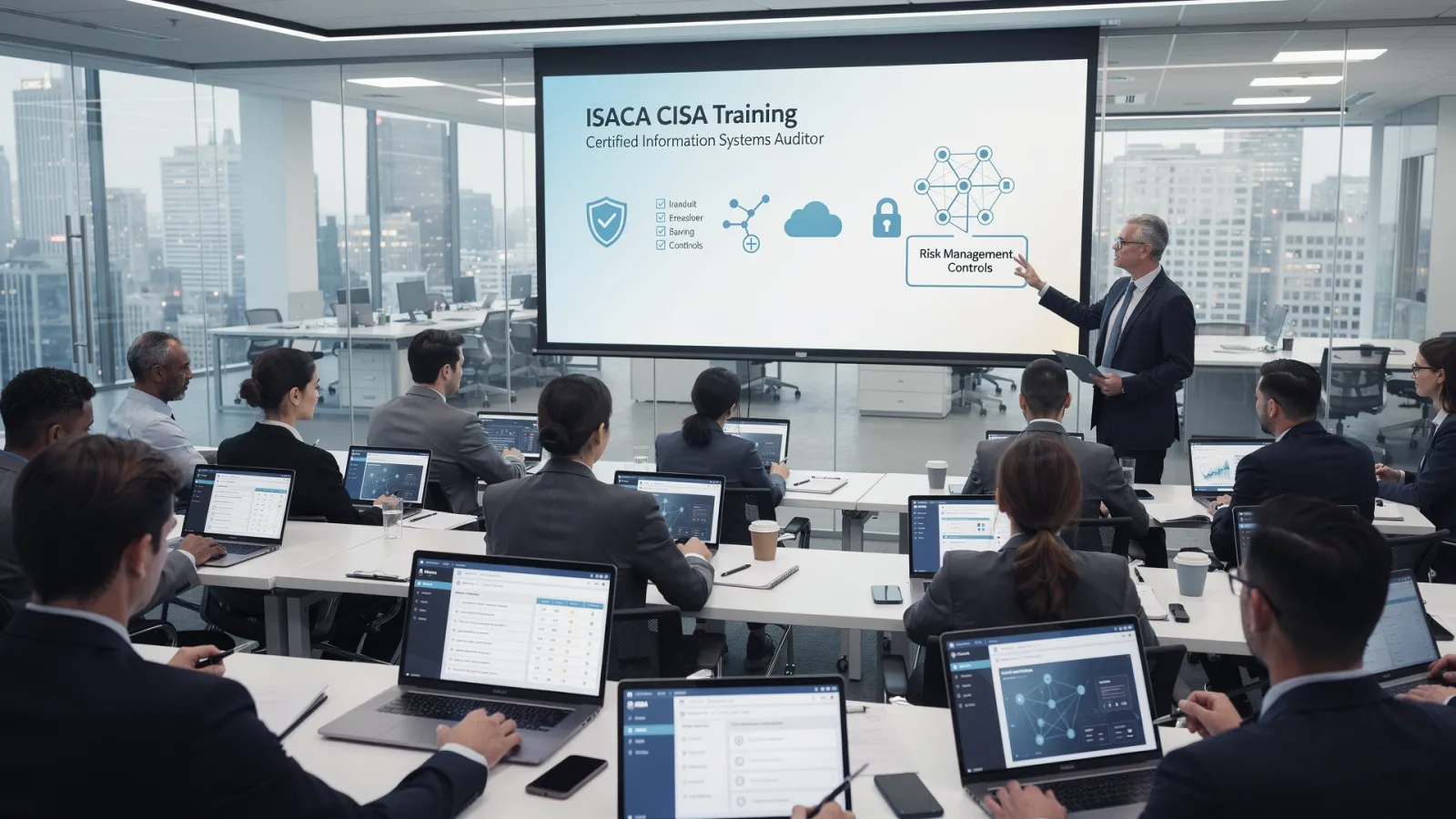
The Cybersecurity Audit training from ISACA fills this gap and provides IT audit/assurance professionals with in-depth knowledge in the area of (cyber)security controls, vulnerabilities, techniques, frameworks, laws and regulations, and strategies. After the training, you will be able to independently conduct Cybersecurity Audits.

In addition to IT auditors, IT Risk professionals also benefit from this training, where they build relevant knowledge about cyber-related risks and control measures.


Certification

This training prepares you for the Cybersecurity Audit Certificate exam from ISACA. This exam can be taken online throughout the year from a location of your choice under the supervision of your webcam. There are no admission requirements for exam participation.

The exam consists of 75 multiple choice questions for which you have two hours to answer. Students who unfortunately fail may participate in the classroom training again free of charge. Our support only ends when you pass.

Training Requirements

  • (IT) Audit- en assuranceprofessionals - krijgen in deze training de kennis die nodig is om specifieke cybersecurity-audits uit te voeren
  • Securityprofessionals - krijgen inzicht in het auditproces
  • IT-riskprofessionals - doen kennis op van cybergerelateerde risico’s en de bijbehorende mitigerende beheersmaatregelen.

Training Content

Description

IT auditors are increasingly being asked to make statements about (cyber)security controls that an organization has implemented to a greater or lesser extent. Since cybersecurity is only covered to a limited extent in regular IT audit training, there is often insufficient knowledge to make well-founded statements about it and to incorporate this field into an audit.

The Cybersecurity Audit training from ISACA fills this gap and provides IT audit/assurance professionals with in-depth knowledge in the area of (cyber)security controls, vulnerabilities, techniques, frameworks, laws and regulations, and strategies. After the training, you will be able to independently conduct Cybersecurity Audits.

In addition to IT auditors, IT Risk professionals also benefit from this training, where they build relevant knowledge about cyber-related risks and control measures.


Certification

This training prepares you for the Cybersecurity Audit Certificate exam from ISACA. This exam can be taken online throughout the year from a location of your choice under the supervision of your webcam. There are no admission requirements for exam participation.

The exam consists of 75 multiple choice questions for which you have two hours to answer. Students who unfortunately fail may participate in the classroom training again free of charge. Our support only ends when you pass.

Training Requirements

  • (IT) Audit- en assuranceprofessionals - krijgen in deze training de kennis die nodig is om specifieke cybersecurity-audits uit te voeren
  • Securityprofessionals - krijgen inzicht in het auditproces
  • IT-riskprofessionals - doen kennis op van cybergerelateerde risico’s en de bijbehorende mitigerende beheersmaatregelen.

Training Content

shape

I am taking this next step in my lifelong learning journey.

1

Applicant Information

2

Billing Information

What Can I Learn After The Cybersecurity Audit training?

  • Understand Security Frameworks to Identify Best Practices
  • Build and deploy secure authorization processes
  • Enhance asset, configuration, change, and patch management practices.
  • Threat and vulnerability management refers to the processes and practices used to identify, assess, and mitigate potential threats and vulnerabilities within an organization's information systems and infrastructure. This involves continuous monitoring, risk assessment, and the implementation of security measures to protect against cyber threats and reduce the likelihood of security breaches. The goal is to enhance the overall security posture of the organization by proactively managing risks and ensuring that vulnerabilities are addressed in a timely manner.
  • Cybersecurity governance encompasses the frameworks, policies, and processes that organizations implement to manage and mitigate cybersecurity risks. It involves the following key aspects: 1. **Leadership and Accountability**: Establishing clear roles and responsibilities for cybersecurity at all levels of the organization, including executive leadership, IT teams, and employees. 2. **Risk Management**: Identifying, assessing, and prioritizing cybersecurity risks to the organization’s assets, followed by implementing strategies to mitigate those risks. 3. **Policies and Procedures**: Developing and enforcing cybersecurity policies and procedures that align with organizational goals and regulatory requirements. 4. **Compliance**: Ensuring adherence to relevant laws, regulations, and standards related to cybersecurity, such as GDPR, HIPAA, or ISO 27001. 5. **Training and Awareness**: Providing ongoing training and awareness programs for employees to foster a culture of cybersecurity and ensure they understand their roles in protecting the organization. 6. **Incident Response**: Establishing an incident response plan that outlines the steps to take in the event of a cybersecurity breach or incident, including communication strategies and recovery processes. 7. **Monitoring and Reporting**: Implementing continuous monitoring of cybersecurity controls and reporting mechanisms to track the effectiveness of the governance framework and identify areas for improvement. 8. **Stakeholder Engagement**: Involving stakeholders, including employees, customers, and partners, in cybersecurity governance to ensure a comprehensive approach to risk management. 9. **Continuous Improvement**: Regularly reviewing and updating cybersecurity governance practices to adapt to evolving threats and changes in the organizational environment. 10. **Integration with Business Strategy**: Aligning cybersecurity governance with the overall business strategy to ensure that cybersecurity considerations are integrated into decision-making processes.
  • Manage enterprise identity and information access
  • Assess threats with the help of vulnerability management tools.
  • Distinguish between firewall and network security technologies.
  • Identify application security control

Schedules

This training is scheduled as follows in the coming period. Missing a date? Feel free to contact us.

Date: 19, 26 juni en 3 juli 2026

Location: TSTC Veenendaal - Klassikaal & Live Online

Date: In overleg

Location:

1

Applicant Information

2

Billing Information

Learning paths

This training can also be taken as part of the below learning path(s). If you want to follow multiple titles from a learning path, please contact our advisors for a suitable bundle offer.

I am taking this next step in my lifelong learning journey.

1

Applicant Information

2

Billing Information

Why experienced professionals choose TSTC for their studies

Train smarter, not harder. TSTC's unique approach guarantees the effective acquisition of skills and the greatest chance of success.

Learn more about TSTC


Toucan Rhino